
di Ivan Quaroni

Lusesita, Dreaming with the Swan Trip, 2024, ceramica smaltata
Lusesita (nata a La Rioja, Spagna, nel 1979) e Daphne Christoforou (classe 1992 e originaria di Nicosia, Cipro), sono artiste che usano la ceramica per realizzare opere ispirate alle fiabe e alla mitologia classica. Entrambe usano l’immaginario fantastico tradizionale, adattandolo alle necessità espressive della modernità. Di fatto, nei loro lavori, diversi per tecnica e stile, l’Epos e il folclore diventano filtri o lenti d’ingrandimento per interpretare il presente ed il rapporto tra vissuto personale e dimensione universale.

Lusesita, Candy Mermaid, 2024, ceramica smaltata
Lusesita costruisce un universo scultoreo sognante e delicato sotto cui si celano significati più complessi e, a tratti, perturbanti. Le sue ceramiche smaltate, ricche di rimandi simbolici e fiabeschi, sono popolate da figure ibride e da animali fantastici, immersi in una lattiginosa dimensione onirica. L’artista spagnola usa, infatti, colori pastello e tinte opalescenti per creare forme morbide, che adombrano, però, tensioni latenti e turbamenti emotivi.

Lusesita, Crazy Summer Vacation, 2024, ceramica smaltata
Le sue figure, per lo più sirene, unicorni, cigni o chimere, sono allegorie che fanno da ponte tra l’immaginario infantile e la dimensione inconscia dell’adulto. Infatti, mentre opere come Candy Mermaid e Little Unicorn attingono evidentemente a miti e leggende antichi, pezzi come Crazy Summer Vacations, Evil Spent Repelent e Dreaming with the Swan Trip, mostrano il talento inventivo e combinatorio dell’artista. Lusesita coniuga la dimensione artigianale e quella concettuale, da vita a un originale linguaggio immaginifico, in cui si fondono memorie e impressioni individuali con simboli ed archetipi collettivi.

Daphne Christoforou, Narcissus, 2024, ceramica smaltata
Dal canto suo, Daphne Christoforou sviluppa una grammatica plastica che reinterpreta in modo ironico e spiazzante l’antica tradizione vascolare greca. Per l’artista, infatti, l’Epos classico non è una materia inerte, ma una continua fonte d’ispirazione che le permette di reinterpretare nuovi miti contemporanei. I suoi vasi sono allegorie di un Olimpo in crisi, dove le divinità affrontano un presente carico di contraddizioni e dubbi. In Ideal Pump, ad esempio, l’artista mostra gli dèi alle prese con i nuovi canoni estetici imposti dalla cultura del fitness. Zeus, Apollo, Hermes, Afrodite e Artemide, dèi che un tempo rappresentavano l’ideale di bellezza e armonia, soccombono alle odierne ossessioni estetiche, sempre più soggette a mode e gusti mutevoli e passeggeri. Nelle opere intitolate Narcissus e Hephaestus, l’artista evidenzia i temi della vanità e del rifiuto dell’estetica tradizionale. Se il primo vaso allude al narcisismo che domina buona parte della società attuale, il secondo – in cui Efesto rifiuta di eseguire le richieste della committenza per dedicarsi alla propria ricerca -, può essere interpretato come una impietosa critica dell’individualismo dell’arte contemporanea e della sua sottovalutazione dell’abilità tecnica. Insomma, Christoforou usa l’iconografia classica come strumento di analisi culturale, evidenziando, con intelligenza e ironia, la complessità contemporanea.
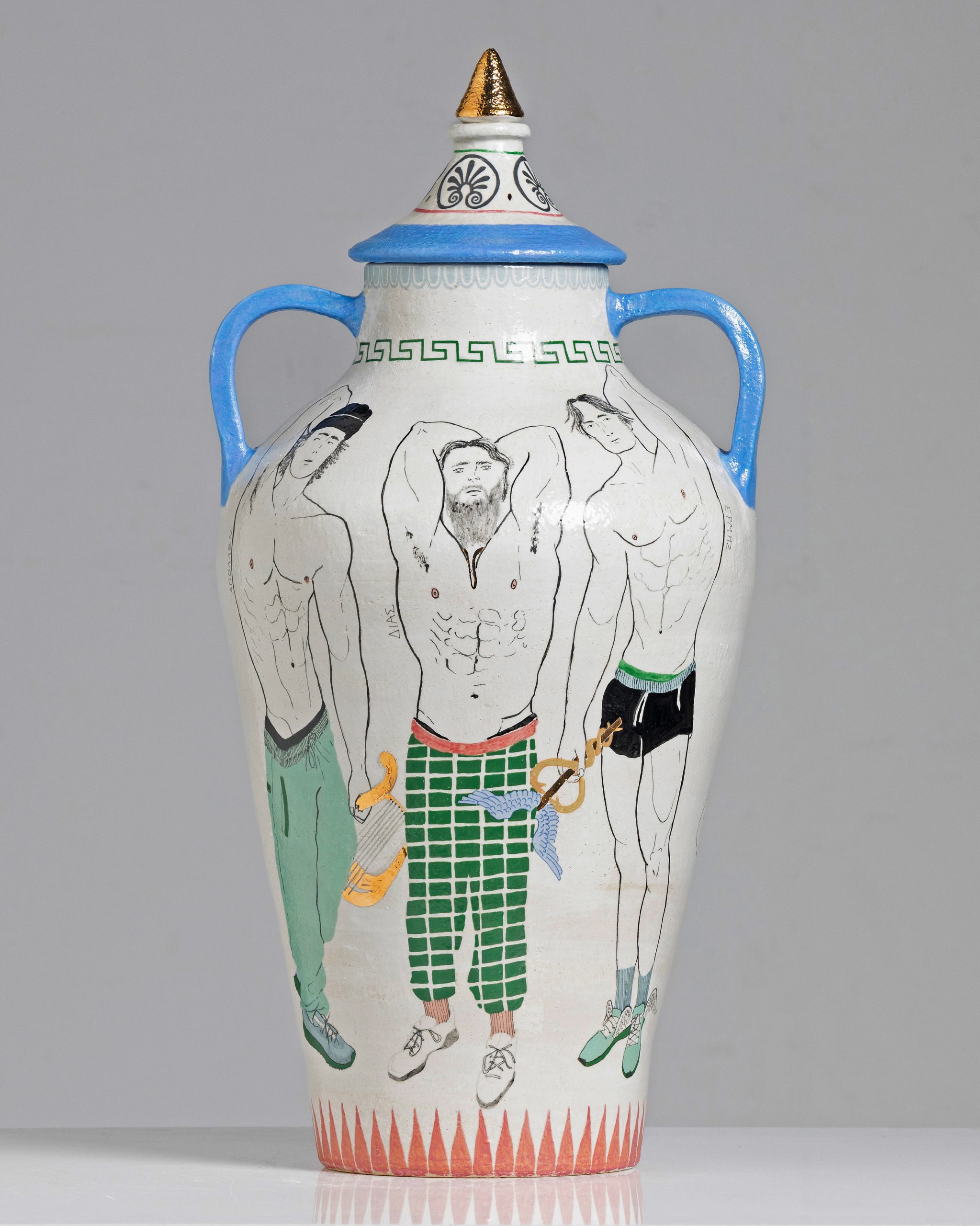
Daphne Christoforou, Ideal Pump, 2024, ceramica smaltata
Pur muovendosi su piani paralleli, le ricerche plastiche di Lusesita e Daphne Christoforou si rivelano, per molti aspetti, complementari. Entrambe modellano la ceramica per narrare storie universali, in cui passato e presente s’incontrano sul piano di un’immaginazione fantastica e irriverente. Lusesita, con il suo surrealismo poetico, esplora la tensione tra innocenza e inquietudine nelle fiabe, mentre Daphne Christoforou, attraverso il filtro epico, svela i capricci e le manie della società dei consumi. L’una e l’altra ci dimostrano che il perpetuarsi di fiabe e miti nella società odierna si deve alla loro capacità di restare, in ogni epoca, i migliori strumenti d’interpretazione critica della realtà.
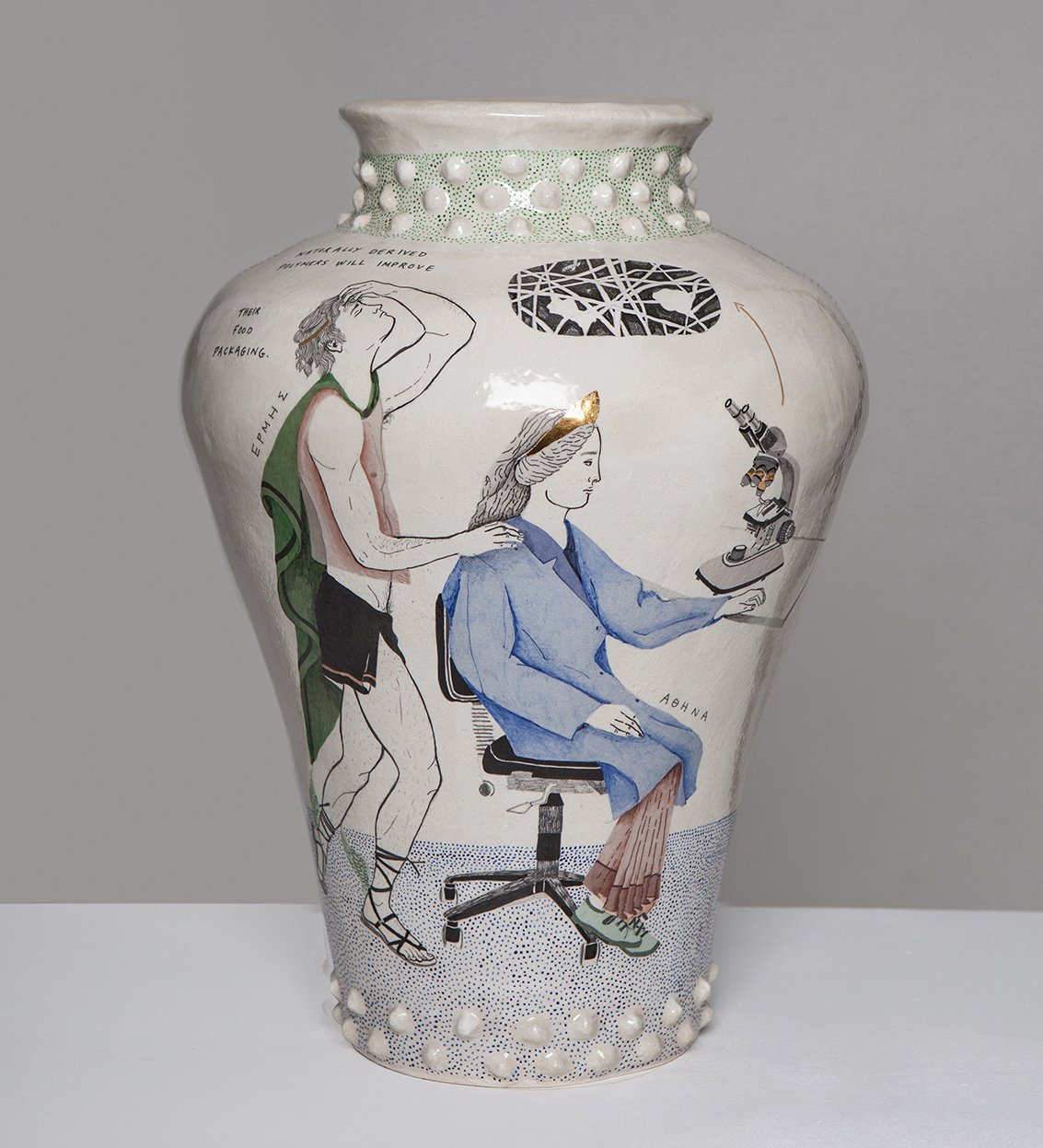
Daphne Christoforou, Saving the Mortals, 2023, ceramica smaltata
Lusesita (born in La Rioja, Spain in 1979) and Daphne Christoforou (born in 1987, a native of Nicosia, Cyprus), are artists who use ceramics to make works inspired by fables and classical mythology. Both use the fantasy imagery of the tradition, adapting it to the expressive needs of the modern world. In their creations, differing in technique and style, epos and folklore become filters or magnifiers to interpret the present and the relationship between personal experience and a universal dimension.
The Spanish artist uses pastel colors and opalescent hues to create soft forms that contain veiled latent tensions and emotional shadings. Her figures, mostly mermaids, unicorns, swans or chimeras, are allegories that bridge the gap between childhood imagination and the unconscious dimension in adults. While works like Candy Mermaid and Little Unicorn clearly draw on age-old myths and legends, pieces like Crazy Summer Vacations, Evil Spell Repellent and Dreaming with the Swan Trip demonstrate the artist’s inventive and combinatory talents. Lusesita brings together artisanal and conceptual approaches, giving rise to an original and imaginative language, which blends individual memories and impressions with collective symbols and archetypes.
Daphne Christoforou, on the other hand, develops a plastic grammar that reinterprets the ancient Greek tradition of pottery in an ironic and disorienting way. For the artist, the classic epos is not inert matter, but a continuing source of inspiration that permits her to reinterpret new contemporary myths. Her pots are allegories of an Olympus in crisis, where the divinities come to terms with a present full of contradictions and doubts. In Ideal Pump, for example, the artist shows the gods as they adapt to the new aesthetic canons imposed by the culture of fitness. Zeus, Apollo, Hermes, Aphrodite and Artemis, divinities that once represented the ideal of beauty and harmony, succumb to current aesthetic obsessions, increasingly governed by changing and passing fashions. In the works titled Narcissus and Hephaestus, the artist underlines the themes of vanity and the rejection of traditional aesthetics. While the former alludes to the narcissism that rules over a large part of today’s society, the latter – in which Hephaestus refuses to carry out the requests of the client, opting to conduct his own research – can be interpreted as a merciless critique of the individualism of contemporary art, with its underestimation of the value of technique. In short, Christoforou uses classic imagery as a tool of cultural analysis, addressing contemporary complexity with intelligence and irony.
Though moving on parallel planes, the sculptural researches of Lusesita and Daphne Christoforou prove in many ways to be complementary. Both shape clay to narrate universal stories, in which past and present meet on the plane of fantastic and irreverent imagination. Lusesita, with her poetic surrealism, explores the tension between innocence and disquiet in fables, while Daphne Christoforou, through an epic filter, reveals the whims and manias of the society of consumption.
Both demonstrate that the perpetuation of fables and myths in today’s society relies on their ability to remain, in any era, the best tools for a critical interpretation of reality.
Info
Lusesita / Daphne Christoforou. Myths and Fables
a cura di Ivan Quaroni
Antonio Colombo Artecontemporanea, Milano


 Ivan Quaroni
Lascia un commento